
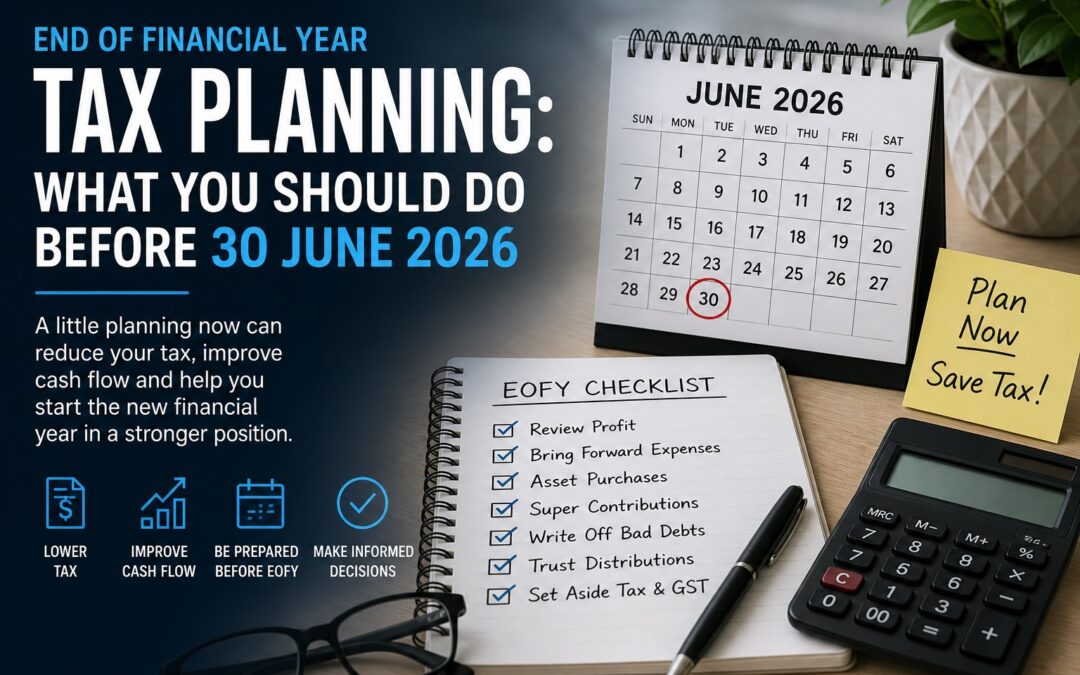
As we approach the end of the financial year, now is the time to review your numbers and make sure you are in the best possible position before 30 June.
Waiting until after year-end means you lose the opportunity to take action. A small amount of planning now can make a significant difference to your tax position and cash flow.
Below are some practical steps to consider.
Review Your Profit Position
Start by understanding where your business is currently sitting.
Are you making more profit than expected? Or are things tighter than anticipated?
This will determine what strategies are appropriate. If your profit is higher, there may be opportunities to reduce your tax. If it is lower, the focus should be on preserving cash flow and staying on top of obligations.
Bring Forward Expenses
If cash flow allows, consider bringing forward expenses into the current financial year.
This may include items such as:
- Insurance premiums
- Subscriptions or software
- Repairs and maintenance
Prepaying certain expenses can increase your deductions this year and reduce your taxable income.
Review Asset Purchases
If you are planning to purchase equipment or tools for the business, it may be worth doing so before 30 June.
You may be able to claim an immediate deduction or accelerate depreciation.
The key point is timing, the asset must be installed and ready for use before 30 June to claim it this year.
Super Contributions
Super is one of the most effective ways to reduce taxable income, but timing is critical.
To claim a deduction this financial year, the super contribution must be received by the fund before 30 June, not just processed.
Also keep in mind the concessional contribution cap (currently $30,000).
Write Off Bad Debts and Clean Up Your Accounts
If you have invoices that are unlikely to be collected, now is the time to write them off.
This ensures you are not paying tax on income you will never receive.
It is also a good opportunity to review your accounts and clear out any old or incorrect balances.
Trust Distribution Planning
If you operate through a trust, decisions need to be made before 30 June regarding how income is distributed.
Getting this right can have a significant impact on the overall tax paid across the family group.
Avoid Common Mistakes
A few things to watch out for:
- Leaving planning until July
- Not setting aside funds for tax and GST
- Missing the super payment deadline
- Making decisions without reviewing the full financial picture
Final Thoughts
Tax planning does not need to be complicated, but it does need to be done before 30 June.
Even a simple review of your numbers can highlight opportunities to reduce tax and avoid surprises.
If you have not looked at your position yet, now is the time to do so. A short discussion can often result in meaningful savings and a clearer plan going into the new financial year.