
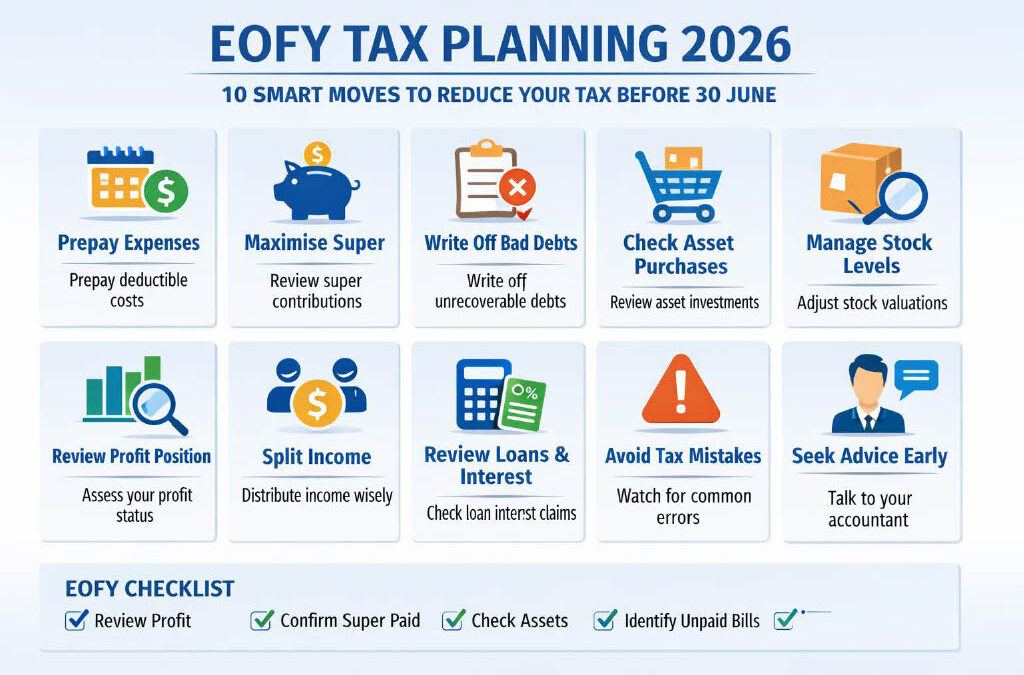
As we approach the end of the financial year, now is the time to review your tax position and take action. With proper planning before 30 June, you can legally reduce your tax, improve cash flow, and avoid costly mistakes.
Below are 10 practical strategies to consider before the financial year ends.
1. Prepay Deductible Expenses
If cash flow allows, consider prepaying expenses such as rent, insurance, or subscriptions. This may bring forward a tax deduction into the current financial year.
2. Review Super Contributions
Ensure any planned super contributions are paid and received before 30 June to claim a deduction this year. Be mindful of contribution caps to avoid excess tax.
3. Write Off Bad Debts
If you have invoices that are unlikely to be recovered, writing them off before year-end can reduce your taxable income.
4. Check Asset Purchases
Depending on current ATO rules, you may be able to immediately write off certain asset purchases. Review any equipment or vehicle purchases before 30 June.
5. Review Business Profit Position
Understanding your current profit position allows you to make informed decisions, such as bringing forward expenses or deferring income where appropriate.
6. Manage Stock Levels
If your business holds stock, reviewing and adjusting stock values (e.g. obsolete or damaged stock) can impact your taxable income.
7. Split Income Where Appropriate
If you operate through a trust or company, ensure income distributions or salary/dividend strategies are structured tax effectively.
8. Review Loan and Interest Expenses
Ensure all interest expenses are correctly recorded and claimed. Missing these can result in lost deductions.
9. Avoid Common Mistakes
- Spending money just to “save tax”
- Claiming private expenses as business
- Missing super payment deadlines
- Incorrect GST treatment
These errors can lead to ATO scrutiny and potential penalties.
10. Get Professional Advice Early
The biggest mistake is leaving tax planning until after 30 June. By then, most opportunities are lost.
A short discussion before year-end can often result in significant tax savings.
EOFY Checklist
Before 30 June, make sure you:
✔ Review your profit position
✔ Confirm super has been paid
✔ Identify unpaid expenses
✔ Review asset purchases
✔ Speak to your accountant
Final Thoughts
EOFY tax planning is not about aggressive strategies, it is about being proactive and making informed decisions.
If you have not yet reviewed your position, now is the time. Acting early can make a significant difference to your tax outcome.
If you would like assistance with your EOFY planning, feel free to get in touch.